



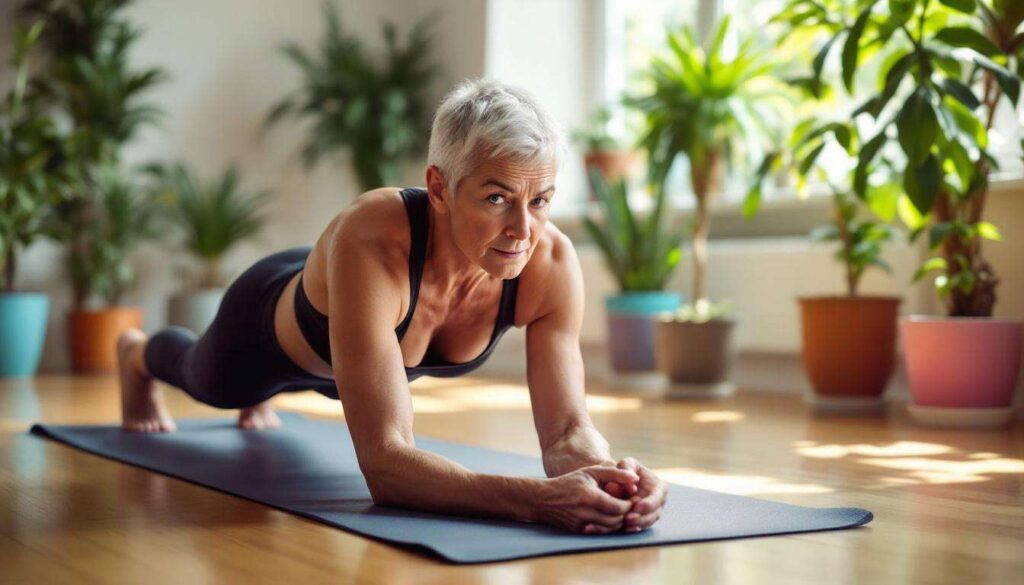
Belly overhang remains one of the most stubborn fitness challenges for individuals over fifty. Traditional crunches often fail to deliver the desired results, and worse, they can strain the neck and lower back. Bodyweight exercises offer a safer, more effective alternative that engages multiple muscle groups simultaneously while promoting functional strength. These movements not only target abdominal fat but also improve balance, posture, and overall mobility—essential factors for maintaining independence and vitality in later years.
The benefits of bodyweight exercises after 50
Joint-friendly strength building
Bodyweight exercises provide low-impact resistance training that protects aging joints while building muscle mass. Unlike heavy weights or high-intensity equipment, these movements rely on natural body mechanics to create resistance. This approach reduces the risk of injury while delivering measurable results in core strength and fat reduction.
Metabolic advantages for mature bodies
After fifty, metabolism naturally slows down, making weight management more challenging. Bodyweight training addresses this issue through several mechanisms:
- Increased muscle mass that burns calories even at rest
- Improved insulin sensitivity for better blood sugar control
- Enhanced cardiovascular function without excessive joint stress
- Hormonal balance support through regular physical activity
Accessibility and convenience
These exercises require no equipment, no gym membership, and no special facilities. Whether at home, in a hotel room, or outdoors, bodyweight movements can be performed anywhere. This accessibility removes common barriers to consistent exercise, making it easier to establish and maintain a routine that produces lasting results.
Understanding these foundational benefits sets the stage for exploring specific movements that target belly overhang, beginning with exercises performed in an upright position.
The crucial role of standing stretches
Standing cross knee drives
This dynamic movement combines cardiovascular activity with core engagement. Standing with feet hip-width apart, bring one knee up toward the opposite elbow while twisting the torso. The rotation activates the oblique muscles, which wrap around the waistline and play a critical role in reducing belly overhang. Perform fifteen to twenty repetitions per side, focusing on controlled movement rather than speed.
Reverse walks for core activation
Walking backward may seem unusual, but it engages the abdominal muscles in ways that forward movement cannot replicate. This exercise requires constant core stabilization to maintain balance and posture. Start in a clear space and take slow, deliberate steps backward for thirty to sixty seconds. The concentration required for balance automatically tightens the abdominal wall, creating an effective workout for the entire midsection.
Benefits of vertical positioning
| Benefit | Impact on belly fat |
|---|---|
| Gravity resistance | Forces core muscles to work harder for stabilization |
| Improved posture | Elongates the torso and reduces appearance of overhang |
| Better circulation | Enhances nutrient delivery to abdominal tissues |
| Functional strength | Translates to easier daily activities |
While standing exercises provide excellent benefits, ground-based movements offer different advantages for targeting stubborn abdominal fat.
Strengthening the core with the plank
Plank walkouts for full-body engagement
Begin standing with feet together. Bend at the hips and place hands on the floor, then walk the hands forward until reaching a full plank position. Hold for two to three seconds before walking the hands back and returning to standing. This movement creates intense core activation throughout the entire range of motion, targeting both the superficial and deep abdominal muscles that support the spine and flatten the belly.
Slow climbers for controlled intensity
From a plank position with hands directly under shoulders, slowly bring one knee toward the chest, hold briefly, then return to starting position. Alternate legs in a controlled manner, avoiding any bouncing or rushing. The deliberate pace maximizes time under tension for the abdominal muscles while minimizing stress on the wrists and shoulders. Aim for twenty to thirty total repetitions, maintaining a flat back throughout.
Proper plank positioning
Correct form determines the effectiveness of plank variations. Key alignment points include:
- Shoulders stacked directly over wrists or elbows
- Body forming a straight line from head to heels
- Core engaged by pulling the navel toward the spine
- Neck in neutral position, eyes looking at the floor
- Breathing steady and controlled throughout the hold
Incorporating these plank variations into a structured morning routine amplifies their effectiveness and establishes consistent progress toward a flatter midsection.
Effective morning routines for a flat belly
The power of morning exercise
Exercising shortly after waking offers unique metabolic advantages for individuals over fifty. Morning workouts occur when cortisol levels are naturally elevated, which can enhance fat burning when combined with appropriate movement. Additionally, completing exercise early eliminates the risk of schedule conflicts that might derail evening workout plans.
A practical morning sequence
This five-move routine takes approximately ten to fifteen minutes and requires no equipment:
- Standing cross knee drives: two sets of fifteen repetitions per side
- Plank walkouts: two sets of eight to ten repetitions
- Slow climbers: two sets of twenty total repetitions
- Reverse walks: two sets of forty-five seconds
- Seated backward rotations: two sets of twelve repetitions per side
Consistency over intensity
For individuals over fifty, regular moderate exercise produces better long-term results than sporadic intense workouts. Morning routines work best when performed five to six days per week, allowing one or two rest days for recovery. This frequency builds habits while giving the body adequate time to adapt and strengthen without overtraining.
While morning exercise provides an excellent foundation, seated movements offer additional options for those with mobility limitations or seeking variety in their routine.
Seated exercises to reduce abdominal fat
Seated backward rotations
Sit on the floor or a mat with knees bent and feet flat. Lean back slightly while maintaining a straight spine, then lift feet a few inches off the ground. Rotate the torso from side to side, bringing hands toward the floor beside each hip. This exercise targets the oblique muscles and transverse abdominis, which are essential for reducing waistline circumference and supporting the lower back.
Modifications for different fitness levels
Seated exercises can be adjusted to match individual capabilities:
| Fitness level | Modification |
|---|---|
| Beginner | Keep feet on floor, reduce rotation range |
| Intermediate | Lift feet slightly, full rotation with control |
| Advanced | Hold a light object, increase repetitions and sets |
Benefits for limited mobility
Seated exercises provide effective core training for individuals with balance issues, joint problems, or recent injuries. These movements allow continued progress toward fitness goals without compromising safety. The seated position reduces fall risk while still engaging the abdominal muscles through controlled rotation and stabilization.
Combining these various exercises into a time-efficient routine ensures consistent results without overwhelming busy schedules.
Optimize your time: a 5-minute routine to sculpt the belly
High-efficiency exercise selection
When time is limited, prioritizing compound movements that engage multiple muscle groups simultaneously delivers maximum benefit. This condensed routine focuses on quality over quantity, performing each exercise for forty-five seconds with fifteen-second transitions:
- Plank walkouts: engage core, shoulders, and legs
- Standing cross knee drives: combine cardio with oblique work
- Slow climbers: intensify core activation with controlled movement
- Seated backward rotations: target deep abdominal muscles
- Reverse walks: challenge balance and core stability
Maximizing short workout sessions
Brief, focused workouts can produce significant results when performed consistently. The key lies in maintaining proper form and full engagement throughout each movement. Rather than rushing through repetitions, concentrate on muscle contraction and controlled breathing. This mindful approach increases effectiveness while reducing injury risk.
Progressive overload without equipment
As fitness improves, increase difficulty by adjusting these variables:
- Extending hold times in static positions
- Increasing repetition speed while maintaining control
- Adding additional rounds of the five-minute circuit
- Decreasing rest periods between exercises
- Incorporating pause holds at peak contraction points
Belly overhang responds best to consistent, targeted exercise combined with proper nutrition and adequate recovery. These five bodyweight movements offer a practical, accessible approach to strengthening the core and reducing abdominal fat without the neck strain and limited effectiveness of traditional crunches. The exercises adapt to various fitness levels, require no equipment, and can be performed anywhere. Whether incorporated into a morning routine, spread throughout the day, or condensed into a five-minute session, these movements provide the foundation for a stronger, flatter midsection. Success depends not on perfection but on regular practice, gradual progression, and patience as the body adapts and transforms.