


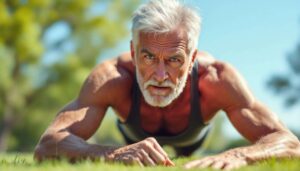

Muscle loss accelerates after the age of 50, affecting strength, balance, and overall quality of life. While many turn to traditional weight training at the gym, recent evidence suggests that specific daily exercises can deliver superior results for rebuilding muscle mass in this age group. These movements focus on functional fitness, mimicking everyday activities while targeting multiple muscle groups simultaneously. The key lies not in heavy lifting, but in consistent, purposeful movement that respects the body’s changing needs.
The benefits of daily exercise after 50
Preserving muscle mass and functional independence
After 50, the body experiences sarcopenia, a natural decline in muscle mass that can reduce strength by up to 15% per decade. Daily exercise combats this process by stimulating muscle protein synthesis and maintaining neuromuscular connections. Regular physical activity preserves not just muscle tissue, but also the functional capacity to perform everyday tasks like climbing stairs, carrying groceries, and maintaining balance.
Metabolic and cardiovascular advantages
Consistent daily movement offers benefits that extend beyond muscle building. These exercises enhance metabolic function, helping regulate blood sugar levels and maintain healthy body composition. The cardiovascular system also benefits from regular activity, with improvements in circulation and heart health that reduce disease risk.
| Health Marker | Impact of Daily Exercise |
|---|---|
| Muscle Mass | Reduced loss by 30-40% |
| Bone Density | Increased by 1-2% annually |
| Balance | Fall risk reduced by 25% |
| Metabolic Rate | Maintained or improved |
Understanding these benefits sets the foundation for appreciating why equipment-free approaches can be particularly effective for this demographic.
The importance of regular physical activity without equipment
Accessibility and consistency advantages
Bodyweight exercises eliminate common barriers to fitness, including gym memberships, equipment costs, and travel time. This accessibility promotes consistency, which is the most critical factor in rebuilding muscle after 50. When exercises can be performed anywhere, adherence rates increase significantly, leading to better long-term results than sporadic gym visits.
Functional movement patterns for daily life
Equipment-free exercises naturally incorporate functional movement patterns that translate directly to daily activities. Unlike isolated weight machine exercises, these movements engage multiple joints and muscle groups simultaneously, improving coordination and practical strength. This approach reduces injury risk while building the specific capabilities needed for maintaining independence.
- No learning curve for complex equipment operation
- Reduced injury risk from improper weight handling
- Natural progression at individual pace
- Integration into daily routine without scheduling constraints
- Cost-effective long-term fitness solution
These principles become evident when examining specific exercises designed to target the lower body, starting with fundamental leg strengthening movements.
Sit-to-stand exercises to strengthen the legs
Technique and muscle activation
The sit-to-stand exercise replicates one of the most essential daily movements while providing comprehensive leg strengthening. This movement engages the quadriceps, hamstrings, glutes, and core muscles simultaneously. To perform correctly, sit in a sturdy chair with feet hip-width apart, then rise to standing without using hands for support, engaging the leg muscles throughout the movement.
Progressive variations for building strength
Progression is built into this exercise naturally, making it ideal for all fitness levels. Beginners can use arm support initially, while advanced practitioners can slow the movement, add pulses at the bottom position, or perform single-leg variations. The exercise directly improves the ability to rise from chairs, beds, and toilets, maintaining crucial independence.
| Level | Repetitions | Sets | Daily Frequency |
|---|---|---|---|
| Beginner | 8-10 | 2-3 | 2 times |
| Intermediate | 12-15 | 3-4 | 2-3 times |
| Advanced | 15-20 | 4-5 | 3 times |
While leg strength forms the foundation, upper body strength remains equally important for complete functional fitness.
Wall push-ups: effectiveness without dumbbells
Upper body strengthening with controlled resistance
Wall push-ups provide exceptional upper body conditioning without the joint stress of traditional floor push-ups or the complexity of dumbbell exercises. Standing at arm’s length from a wall, place hands flat against the surface at shoulder height and width. Lean forward, bending elbows to bring the chest toward the wall, then push back to starting position. This movement targets the chest, shoulders, triceps, and core stabilizers.
Adaptability for different fitness levels
The beauty of wall push-ups lies in their infinite adjustability. Moving feet closer to the wall decreases difficulty, while stepping farther back increases resistance. As strength improves, practitioners can transition to counter-height surfaces, then benches, and eventually floor variations. This graduated approach prevents injury while ensuring continuous muscle development.
- Reduces wrist strain common with floor push-ups
- Maintains proper spinal alignment throughout movement
- Builds shoulder stability crucial for reaching and lifting
- Improves posture by strengthening upper back muscles
- Prepares body for more challenging variations
Complementing these standing exercises, floor-based movements offer additional benefits for core and posterior chain development.
Pilates bridges: gently strengthening the body
Core and posterior chain activation
The Pilates bridge exercise delivers powerful results through controlled movement, targeting the glutes, hamstrings, lower back, and deep core muscles. Lying on the back with knees bent and feet flat on the floor, lift hips toward the ceiling while maintaining a neutral spine. This movement strengthens the posterior chain, which is essential for posture, balance, and preventing lower back pain.
Therapeutic benefits and injury prevention
Bridges offer therapeutic value beyond muscle building, improving spinal mobility and reducing chronic pain. The exercise strengthens muscles that support the spine while promoting proper pelvic alignment. Regular practice enhances hip flexibility and counteracts the effects of prolonged sitting, a common contributor to muscle imbalance in older adults.
| Bridge Variation | Primary Focus | Difficulty Level |
|---|---|---|
| Basic Bridge | Glutes and hamstrings | Beginner |
| Single-leg Bridge | Unilateral strength | Intermediate |
| Bridge with Pulses | Muscular endurance | Intermediate |
| Elevated Bridge | Increased range of motion | Advanced |
Integrating these individual exercises into a comprehensive routine maximizes their collective benefits.
7-minute standing routines: simply regain muscle
Time-efficient full-body conditioning
Standing routines that combine multiple exercises into seven-minute sequences provide remarkable efficiency for busy schedules. These circuits alternate between lower body, upper body, and core movements, maintaining elevated heart rate while building muscle across all major groups. The standing format improves balance and coordination while reducing the time spent transitioning between floor and standing positions.
Sample routine structure and progression
A typical seven-minute standing routine incorporates six to eight exercises performed for 30-45 seconds each, with brief transitions between movements. This format combines strength building with cardiovascular conditioning, delivering comprehensive fitness benefits in minimal time. The routine can be repeated multiple times daily as fitness improves.
- Marching in place with high knees (45 seconds)
- Wall push-ups (30 seconds)
- Standing leg lifts alternating sides (45 seconds)
- Arm circles forward and backward (30 seconds)
- Standing side bends (30 seconds)
- Calf raises (45 seconds)
- Standing torso twists (30 seconds)
- Final march in place cooldown (30 seconds)
These routines demonstrate that muscle rebuilding after 50 requires neither extensive time commitments nor expensive equipment, only consistent effort and proper technique.
Rebuilding muscle after 50 through daily exercise offers a practical, sustainable alternative to traditional weight training. The five approaches outlined focus on functional movements that enhance everyday capabilities while systematically strengthening all major muscle groups. Sit-to-stand exercises build essential leg strength, wall push-ups develop upper body power without joint stress, and Pilates bridges strengthen the core and posterior chain. When integrated into efficient seven-minute standing routines, these exercises provide comprehensive conditioning that fits any schedule. The equipment-free nature of these movements eliminates barriers to consistency, the true key to long-term success. By committing to daily practice, individuals over 50 can reverse muscle loss, improve balance and flexibility, and maintain the physical independence that defines quality of life.