



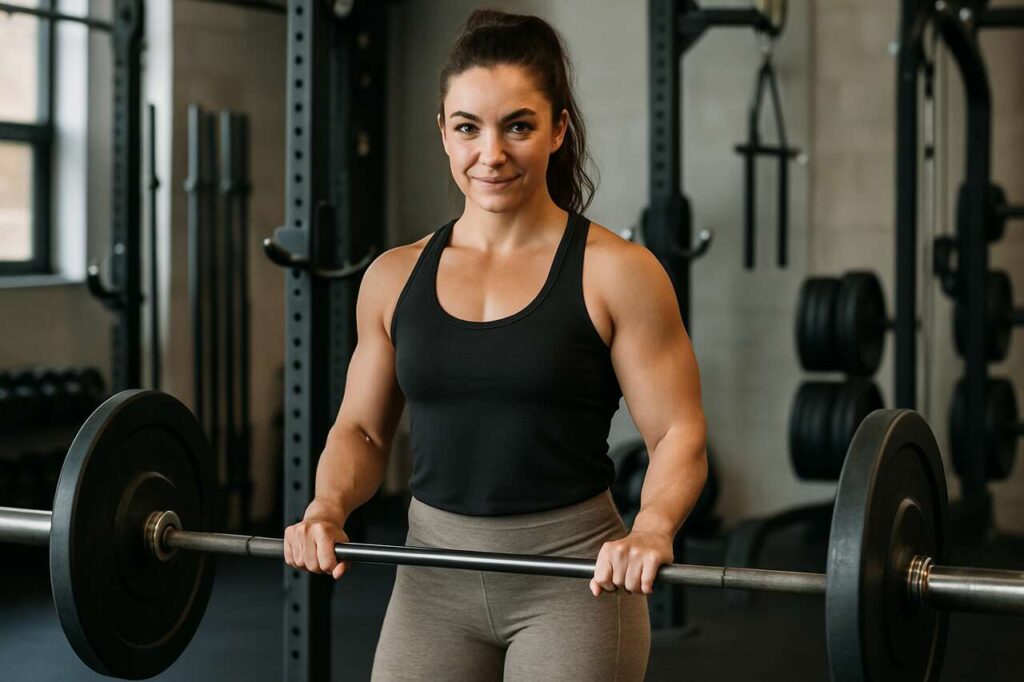
Many women avoid the weight room due to a persistent fear that lifting heavy weights will transform their bodies into something they don’t desire. This concern, rooted in misconceptions about how the female body responds to resistance training, continues to hold countless women back from experiencing the transformative benefits of strength work. The reality is far different from the myth, and understanding the truth can open doors to improved health, confidence, and physical capability that extends far beyond aesthetic concerns.
The most common myth among women about strength training
The fear of becoming bulky
The most prevalent myth that keeps women from picking up weights is the belief that strength training will make them big and bulky. This fear manifests in various ways, with women expressing concerns about developing large, masculine-looking muscles or losing their feminine physique. Many prospective clients approach fitness professionals with statements like “I don’t want to get too big” or “I just want to tone, not build muscle.” These phrases reveal a fundamental misunderstanding about how muscle development actually works in the female body.
Where this misconception originates
This myth stems from several sources that have shaped public perception over decades:
- Media portrayals of female bodybuilders who represent an extreme end of the fitness spectrum
- Outdated societal norms that equate femininity with physical fragility
- Lack of education about the biological differences between male and female muscle development
- Marketing campaigns that promote “toning” exercises over actual strength training
- Social conditioning that discourages women from appearing physically strong
The images of heavily muscled female bodybuilders that circulate in media create a false impression that any woman who lifts weights will inevitably develop that physique. This ignores the years of dedicated training, specific nutritional protocols, and often supplementation required to achieve such extreme muscle development. For the average woman engaging in regular strength training, this outcome is virtually impossible without deliberate effort.
The biological reality of female muscle growth
Women face significant biological barriers to building large amounts of muscle mass. The primary factor is hormonal composition: women naturally produce far less testosterone than men, typically ranging from one-tenth to one-twentieth of male levels. Testosterone plays a crucial role in muscle protein synthesis and hypertrophy, making it much more challenging for women to gain substantial muscle size even with consistent, intense training.
| Factor | Male | Female |
|---|---|---|
| Testosterone levels | 300-1000 ng/dL | 15-70 ng/dL |
| Muscle mass percentage | 36-45% | 28-36% |
| Muscle gain potential (first year) | 20-25 lbs | 10-12 lbs |
Understanding these biological realities helps explain why the fear of becoming bulky is unfounded for most women who engage in regular strength training. The process of building significant muscle requires not just lifting weights but a complex interplay of genetics, hormones, nutrition, and specific training protocols designed for hypertrophy.
The surprising benefits of strength training for women
Physical health improvements
Strength training offers women a remarkable array of health benefits that extend far beyond muscle development. Bone density improvement stands as one of the most critical advantages, particularly as women age and face increased risk of osteoporosis. Resistance training stimulates bone formation and slows bone loss, providing a protective effect that can last throughout life. Studies consistently demonstrate that women who engage in regular strength training maintain stronger bones and experience fewer fractures as they age.
The metabolic benefits of strength training create lasting changes in body composition and energy expenditure. Muscle tissue is metabolically active, meaning it burns calories even at rest. By increasing lean muscle mass, women can elevate their resting metabolic rate, making weight management more sustainable over time. This metabolic boost continues long after the workout ends, with the body burning additional calories during the recovery and repair process.
Disease prevention and management
Regular strength training significantly reduces the risk of chronic diseases that disproportionately affect women:
- Cardiovascular disease risk decreases through improved blood pressure and cholesterol profiles
- Type 2 diabetes prevention through enhanced insulin sensitivity and glucose metabolism
- Arthritis symptom reduction by strengthening muscles around joints
- Lower back pain relief through core strengthening and improved posture
- Reduced risk of certain cancers, including breast and colon cancer
Psychological and emotional benefits
The mental health benefits of strength training rival its physical advantages. Women who engage in regular resistance training report increased self-confidence, reduced anxiety, and improved mood. The sense of accomplishment that comes from progressively lifting heavier weights or mastering new movements creates a powerful psychological effect that extends into other areas of life. This empowerment often translates into greater assertiveness, improved body image, and a stronger sense of personal agency.
Strength training also provides stress relief through the release of endorphins and the meditative focus required during lifting sessions. The measurable progress inherent in strength training creates tangible goals and achievements that boost self-esteem and provide motivation to continue. These psychological benefits often prove more valuable than any physical changes, fundamentally altering how women view themselves and their capabilities.
The truth about female muscle gain
What actually happens when women lift weights
When women begin strength training, their bodies undergo positive adaptations that improve function without creating excessive size. Initial strength gains come primarily from neuromuscular adaptations rather than muscle growth. The nervous system becomes more efficient at recruiting muscle fibers, allowing women to lift heavier weights without significant changes in muscle size. This explains why beginners often experience rapid strength increases in the first few months without visible muscle growth.
As training continues, women do build muscle tissue, but this growth occurs gradually and controllably. The typical woman following a balanced strength training program might gain between ten and twelve pounds of muscle in her first year of consistent training. This muscle gain is distributed across the entire body and, combined with potential fat loss, usually results in a leaner, more defined appearance rather than a bulky one.
The deliberate process of building significant muscle
Achieving the muscular physiques seen in bodybuilding competitions requires specific conditions that most women neither pursue nor accidentally stumble into:
| Requirement | Typical fitness program | Competitive bodybuilding |
|---|---|---|
| Training frequency | 3-4 days per week | 5-6 days per week |
| Caloric surplus | Maintenance or slight deficit | Significant surplus (500+ calories) |
| Protein intake | 0.7-1.0g per lb bodyweight | 1.2-1.5g per lb bodyweight |
| Training duration | Years of consistent work | Decade-plus commitment |
Professional female bodybuilders dedicate their lives to muscle development through extreme nutritional precision, specialized training protocols, and often performance-enhancing substances. The average woman engaging in strength training two to four times weekly while eating a normal, healthy diet will never accidentally achieve this level of muscularity. The process is simply too demanding and requires too much intentional effort to occur by chance.
Genetics and individual variation
Individual genetic factors influence how women respond to strength training, with some naturally building muscle more easily than others. However, even women with favorable genetics for muscle growth require consistent effort, proper nutrition, and specific training approaches to develop significant size. Most women find that strength training creates a toned, athletic appearance characterized by visible muscle definition without excessive bulk. The fear of waking up one day with unexpectedly large muscles is completely unfounded, as muscle growth occurs gradually over months and years, allowing women to adjust their training if they feel they’re developing more muscle than desired.
How to start a suitable strength training program
Beginning with the basics
Starting a strength training program requires no special equipment or gym membership. Women new to resistance training should focus on mastering fundamental movement patterns before adding significant weight. Bodyweight exercises provide an excellent foundation, teaching proper form and building initial strength. Movements like squats, push-ups, lunges, and planks develop core strength and stability while preparing the body for more advanced training.
For those ready to add external resistance, the following progression works well:
- Start with bodyweight exercises to learn proper movement patterns
- Progress to resistance bands or light dumbbells
- Gradually increase weight as form improves and movements feel comfortable
- Consider working with a qualified trainer for initial guidance on technique
- Focus on full-body workouts two to three times weekly
Essential exercises for beginners
A well-rounded strength training program includes exercises that target all major muscle groups. Compound movements that engage multiple joints and muscle groups simultaneously provide the most efficient path to building strength. These exercises include squats for lower body development, push-ups or bench presses for chest and arms, rows for back strength, overhead presses for shoulders, and deadlifts for posterior chain development. Each of these movements can be modified to match current fitness levels, making them accessible to beginners while remaining challenging for advanced practitioners.
Setting realistic expectations and goals
Success in strength training comes from setting appropriate goals and maintaining realistic expectations. Rather than focusing on aesthetic outcomes, women should prioritize performance-based goals such as completing a certain number of push-ups, lifting a specific weight, or holding a plank for a target duration. These measurable objectives provide clear markers of progress and help maintain motivation when visual changes occur slowly. Tracking workouts in a journal or app allows women to see their strength gains over time, reinforcing the effectiveness of their efforts even when physical changes are subtle.
Tips for incorporating strength training into your daily routine
Time-efficient workout strategies
One of the most common barriers to strength training is the perception that it requires hours at the gym. In reality, effective strength workouts can be completed in 30 to 45 minutes. Circuit training, which involves moving quickly between exercises with minimal rest, provides both strength and cardiovascular benefits in a condensed timeframe. Supersets, where two exercises are performed back-to-back, further reduce workout duration while maintaining effectiveness.
For women with extremely limited time, the following approaches maximize efficiency:
- Focus on compound movements that work multiple muscle groups simultaneously
- Use high-intensity interval training principles with resistance exercises
- Break workouts into shorter sessions throughout the day if necessary
- Prioritize consistency over duration, making shorter workouts sustainable
- Utilize home workout options to eliminate commute time
Creating sustainable habits
Long-term success depends on building strength training into daily routines as a non-negotiable habit rather than an optional activity. Scheduling workouts at consistent times helps establish this pattern, whether first thing in the morning, during lunch breaks, or after work. Treating these sessions with the same importance as other appointments increases adherence. Many women find that morning workouts prove most sustainable, as they complete training before daily responsibilities create competing demands on time and energy.
Overcoming common obstacles
Women face various challenges when attempting to maintain consistent strength training routines. Gym intimidation affects many beginners who feel self-conscious in weight rooms dominated by male lifters. Home workout options, women-only gym spaces, or small group training sessions can help overcome this barrier. For those juggling family responsibilities, involving children in physical activity or trading childcare with other parents creates opportunities for uninterrupted training time. The key is identifying specific obstacles and developing practical solutions rather than allowing challenges to derail progress entirely.
The importance of diet and rest in strength training
Nutritional foundations for strength development
Proper nutrition supports strength training goals by providing the raw materials for muscle repair and energy for workouts. Adequate protein intake proves particularly crucial, as amino acids from protein serve as building blocks for muscle tissue. Women engaged in regular strength training should aim for approximately 0.7 to 1.0 grams of protein per pound of body weight daily, distributed across meals throughout the day. This protein can come from animal sources like chicken, fish, and eggs, or plant-based options including legumes, tofu, and quinoa.
Beyond protein, overall caloric intake must support training demands. Women seeking to build strength while maintaining or losing weight should eat at maintenance calories or a slight deficit, ensuring adequate nutrition without excessive restriction that could impair recovery. Carbohydrates provide energy for intense workouts, while healthy fats support hormone production and overall health.
The critical role of recovery
Strength gains occur not during workouts but during the recovery period that follows. When women lift weights, they create microscopic tears in muscle fibers. The body repairs these tears during rest, building the muscle back stronger than before. Without adequate recovery, this adaptation process cannot occur effectively, leading to stagnation or even regression in strength development.
| Recovery element | Recommendation | Impact on strength training |
|---|---|---|
| Sleep | 7-9 hours nightly | Muscle repair and hormone regulation |
| Rest days | 1-2 per week minimum | Allows complete muscle recovery |
| Hydration | Half body weight in ounces daily | Supports cellular function and nutrient transport |
| Active recovery | Light activity on rest days | Promotes blood flow without stress |
Balancing training intensity and recovery needs
Women must learn to distinguish between productive training stress and counterproductive overtraining. Signs of inadequate recovery include persistent fatigue, declining performance, increased injury susceptibility, and disrupted sleep patterns. When these symptoms appear, reducing training volume or intensity allows the body to catch up with recovery demands. This doesn’t represent weakness or lack of dedication but rather intelligent training that prioritizes long-term progress over short-term intensity. Strategic deload weeks, where training volume decreases by 40 to 50 percent, help prevent burnout and allow the body to fully recover before resuming normal training loads.
The fear that strength training will create unwanted bulk has prevented countless women from experiencing its profound benefits. The biological reality is that women lack the hormonal profile necessary to build large muscles accidentally, and the process of significant muscle development requires years of dedicated effort with specific training and nutritional protocols. Instead of creating bulk, strength training typically produces a leaner, more defined physique while delivering substantial health benefits including improved bone density, disease prevention, enhanced metabolism, and psychological empowerment. By understanding the truth about female muscle gain and approaching strength training with realistic expectations, women can confidently embrace resistance training as a powerful tool for improving physical health, mental well-being, and overall quality of life. The path forward requires dispelling outdated myths and recognizing that strength and femininity complement rather than contradict each other.