



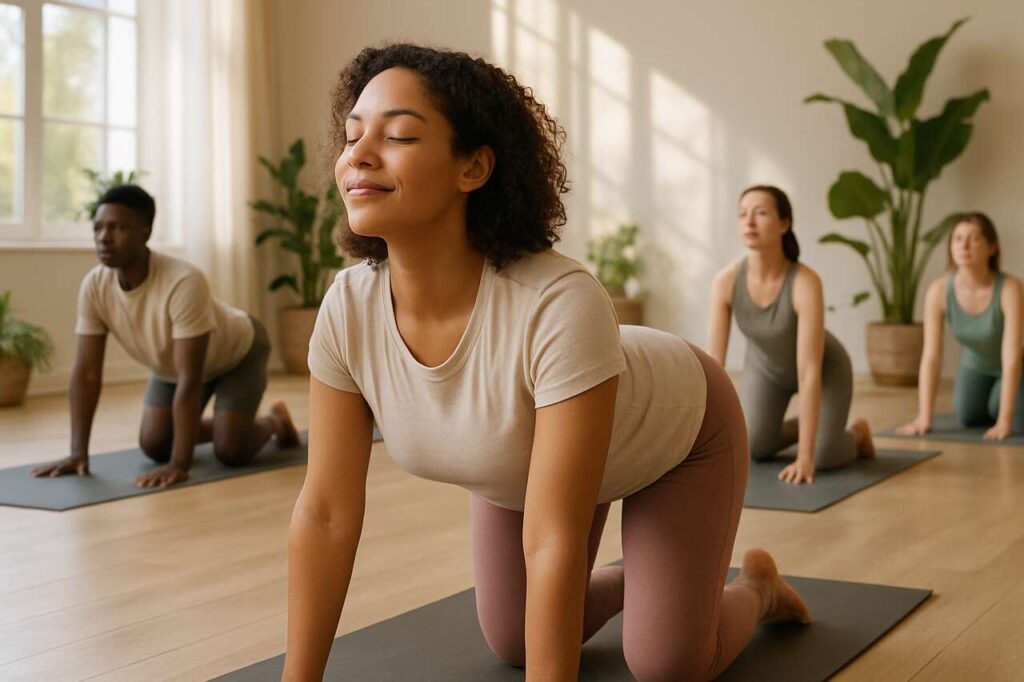
Bloating affects millions of people worldwide, causing discomfort that can disrupt daily activities and diminish quality of life. This common digestive issue often strikes after meals, leaving individuals feeling swollen and uncomfortable. While over-the-counter remedies exist, many people seek natural solutions to address this persistent problem. A yoga instructor specializing in digestive wellness has identified four specific poses that can provide immediate relief from bloating, offering a gentle yet effective approach to managing this uncomfortable condition.
Understanding the causes of bloating
Common dietary triggers
Bloating frequently stems from dietary choices that challenge the digestive system. Certain foods naturally produce more gas during digestion, creating that uncomfortable swollen sensation. High-fiber foods, while beneficial for overall health, can temporarily increase gas production as the body adjusts to processing them.
- Beans and legumes contain complex sugars that ferment in the intestines
- Cruciferous vegetables like broccoli and cauliflower produce sulfur compounds during digestion
- Carbonated beverages introduce excess air into the digestive tract
- Dairy products can cause issues for those with lactose intolerance
- Artificial sweeteners may trigger digestive distress in sensitive individuals
Lifestyle factors contributing to bloating
Beyond food choices, lifestyle habits play a significant role in bloating. Eating too quickly prevents proper chewing and causes excess air swallowing, a condition known as aerophagia. Stress also impacts digestion by altering gut motility and increasing sensitivity to normal digestive processes.
Physical inactivity compounds the problem by slowing down the digestive system. When the body remains sedentary, food moves more slowly through the intestines, increasing the likelihood of gas buildup and discomfort. Understanding these underlying causes provides context for why movement-based solutions like yoga prove so effective.
Why yoga for bloating relief
The mind-body connection in digestion
Yoga addresses bloating through its unique combination of physical movement and mental relaxation. The practice activates the parasympathetic nervous system, which governs the “rest and digest” response. When stress levels decrease, the digestive system functions more efficiently, reducing symptoms like bloating and cramping.
Research demonstrates that chronic stress directly impacts gut health by altering the balance of beneficial bacteria and increasing intestinal permeability. Yoga counteracts these effects by promoting relaxation and reducing cortisol levels, creating an internal environment conducive to optimal digestion.
Physical mechanisms of relief
The specific movements in yoga poses provide mechanical benefits for the digestive system. Gentle compression and stretching of the abdominal area stimulates peristalsis, the wave-like muscle contractions that move food through the intestines. This physical stimulation helps trapped gas move more freely, providing relatively quick relief.
| Yoga benefit | Digestive impact |
|---|---|
| Gentle compression | Releases trapped gas |
| Twisting motions | Massages internal organs |
| Deep breathing | Reduces stress hormones |
| Increased circulation | Improves nutrient absorption |
These combined effects make yoga particularly well-suited for addressing bloating, offering both immediate symptom relief and long-term digestive support.
The benefits of yoga poses on digestion
Improved gastrointestinal motility
Regular yoga practice enhances intestinal movement patterns, ensuring that food progresses smoothly through the digestive tract. The various poses create alternating patterns of compression and release in the abdominal cavity, essentially providing an internal massage for the digestive organs. This gentle stimulation encourages regular bowel movements and prevents the stagnation that contributes to bloating.
Enhanced blood flow to digestive organs
Specific yoga positions increase circulation to the stomach, intestines, and liver. This improved blood flow delivers more oxygen and nutrients to digestive tissues, supporting their optimal function. Better circulation also aids in removing metabolic waste products that can accumulate and contribute to inflammation and discomfort.
Stress reduction and its digestive benefits
The breathing techniques incorporated into yoga practice activate the vagus nerve, which plays a crucial role in digestive function. Deep, controlled breathing signals the body to shift from fight-or-flight mode into a relaxed state where digestion can proceed efficiently. This neurological shift has profound effects on reducing bloating and other digestive complaints.
With this foundation established, exploring the specific poses that deliver the most immediate relief becomes the natural next step.
Child’s pose: comfort and relaxation
Proper execution technique
Child’s pose, or Balasana, serves as a foundational position for bloating relief. To perform this pose correctly, begin by kneeling on the floor with knees hip-width apart. Sit back on the heels and slowly fold forward, extending the arms in front or resting them alongside the body. The forehead should rest gently on the floor or a cushion.
- Keep the knees separated to allow room for the abdomen
- Breathe deeply into the back and sides of the ribcage
- Hold the position for one to three minutes
- Focus on releasing tension with each exhale
How this pose relieves bloating
The gentle compression of the abdomen against the thighs in child’s pose creates subtle pressure that encourages gas to move through the intestines. This position also promotes relaxation of the abdominal muscles, which often tense up when bloating occurs. The forward fold calms the nervous system, reducing stress-related digestive issues.
Building on this gentle compression, the next pose introduces dynamic movement to further stimulate the digestive system.
Cat and cow: abdominal mobilization
Movement sequence and timing
The cat-cow sequence involves alternating between two complementary positions that create a pumping action in the abdomen. Start on hands and knees in a tabletop position with wrists directly under shoulders and knees under hips. For cow pose, inhale while dropping the belly toward the floor and lifting the chest and tailbone. For cat pose, exhale while rounding the spine upward and tucking the chin toward the chest.
Digestive benefits of spinal flexion
This flowing movement pattern provides several digestive advantages. The alternating compression and expansion of the abdominal cavity massages the internal organs, stimulating digestive function. The rhythmic movement coordinates with breathing, enhancing the parasympathetic nervous system activation that supports digestion.
| Movement phase | Digestive effect |
|---|---|
| Cow pose (belly drop) | Stretches abdominal organs |
| Cat pose (spine round) | Compresses digestive tract |
| Continuous flow | Creates pumping action |
Performing this sequence for five to ten breath cycles often produces noticeable relief from bloating. The combination of movement and breath work makes this pose particularly effective for immediate symptom management.
Seated twist: for a calmed belly
Executing the seated spinal twist
Seated twists offer powerful digestive benefits through their wringing action on the abdominal organs. To perform a basic seated twist, sit with legs extended and bend the right knee, placing the right foot on the outside of the left thigh. Place the right hand behind the body for support and bring the left elbow to the outside of the right knee. Gently twist to the right while maintaining a tall spine.
The wringing effect on digestive organs
Twisting poses create a squeezing and releasing action that stimulates the digestive organs in a unique way. As you twist, blood flow to the intestines temporarily decreases. When you release the twist, fresh blood rushes back in, bringing oxygen and nutrients while flushing out toxins. This process helps move trapped gas and encourages regular intestinal contractions.
- Hold each side for 30 to 60 seconds
- Breathe deeply throughout the twist
- Keep the spine elongated rather than collapsing
- Repeat on both sides for balanced benefits
The instructor emphasizes performing twists gently, never forcing the body beyond its comfortable range of motion. This measured approach ensures safety while still delivering the digestive benefits that make seated twists so effective for bloating relief.
These four yoga poses offer accessible, natural relief from bloating through their combined effects on the physical body and nervous system. The gentle compression of child’s pose provides immediate comfort, while cat-cow creates beneficial movement in the digestive tract. Seated twists add a wringing action that helps release trapped gas and stimulate organ function. Together, these poses address bloating through multiple mechanisms, offering a comprehensive approach to digestive wellness. Incorporating these movements into a regular routine can provide both immediate symptom relief and long-term improvements in digestive health, making them valuable tools for anyone experiencing occasional or chronic bloating.