



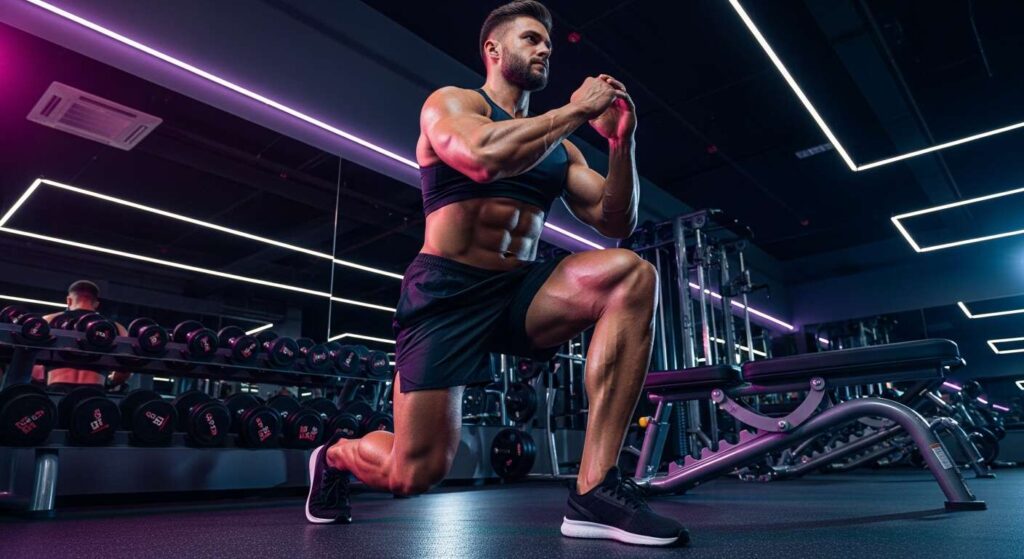
Building stronger legs doesn’t require hours at the gym. An exercise scientist has identified two powerful 10-minute workouts that deliver remarkable results in minimal time. These efficient routines focus on compound movements that engage multiple muscle groups simultaneously, making them ideal for busy individuals who want to maximize their training impact. The key lies in selecting exercises that target the quadriceps, hamstrings, glutes, and calves through strategic movement patterns that promote both strength and functional fitness.
The benefits of short leg workouts
Time efficiency meets maximum results
Short leg workouts offer significant advantages for individuals struggling to fit exercise into packed schedules. A focused 10-minute session eliminates common barriers to training while delivering measurable strength gains. Research demonstrates that high-intensity, brief workouts can produce comparable results to longer sessions when executed with proper form and intensity.
The physiological benefits extend beyond mere convenience:
- Enhanced metabolic response due to engaging large muscle groups
- Improved cardiovascular health through compound movements
- Reduced risk of overtraining and burnout
- Better adherence to consistent training schedules
- Increased calorie burn that continues post-workout
Functional strength for daily activities
Leg exercises facilitate essential everyday movements that many people take for granted. Walking, climbing stairs, lifting objects, and maintaining balance all rely on strong lower body muscles. By dedicating just 10 minutes to targeted leg training, individuals can significantly improve their quality of life and reduce injury risk during routine activities.
| Activity | Primary Muscles Used | Benefit of Training |
|---|---|---|
| Climbing stairs | Quadriceps, glutes | Reduced fatigue, better endurance |
| Walking | Hamstrings, calves | Improved gait, injury prevention |
| Lifting objects | Full leg complex | Enhanced power, safer mechanics |
These practical applications make short leg workouts particularly valuable for aging populations and those recovering from sedentary lifestyles. Understanding which specific exercises deliver optimal results becomes the next crucial consideration.
The two key exercises for stronger legs
The foundation of effective leg training
Exercise scientists emphasize that two primary movements form the cornerstone of efficient leg development: the goblet squat and the Romanian deadlift. These compound exercises target multiple muscle groups simultaneously, creating a comprehensive stimulus for strength adaptation in minimal time.
The strategic pairing of these movements addresses different movement patterns:
- Squatting pattern: emphasizes knee flexion and quadriceps engagement
- Hinging pattern: prioritizes hip extension and posterior chain activation
- Combined coverage: ensures balanced development across all major leg muscles
- Complementary mechanics: reduces redundancy while maximizing efficiency
Why these exercises work synergistically
The goblet squat and Romanian deadlift create a powerful synergy when performed together. While the squat emphasizes anterior chain muscles including quadriceps and hip flexors, the Romanian deadlift targets the posterior chain comprising hamstrings, glutes, and lower back. This balanced approach prevents muscular imbalances that often lead to injury and performance limitations.
Training frequency recommendations suggest incorporating these exercises 1 to 2 times weekly for optimal results. This allows adequate recovery while maintaining consistent stimulus for adaptation. The specific mechanics of each movement deserve detailed examination to ensure proper execution.
The goblet squat: a must-do
Proper form and execution
The goblet squat stands as a fundamental movement for building leg strength while maintaining an upright torso position. Holding a weight close to the chest creates a counterbalance that encourages proper squat mechanics, making it accessible for beginners while remaining challenging for advanced practitioners.
Key technical points include:
- Hold the weight at chest height with elbows pointing downward
- Maintain feet shoulder-width apart with toes slightly outward
- Descend by pushing hips back and bending knees simultaneously
- Keep chest elevated and spine neutral throughout the movement
- Drive through heels to return to starting position
Muscle activation and benefits
This exercise provides comprehensive engagement of the quadriceps, glutes, adductors, and core musculature. The front-loaded weight position demands significant core stabilization, turning a leg exercise into a full-body movement that enhances functional strength.
| Muscle Group | Activation Level | Primary Function |
|---|---|---|
| Quadriceps | High | Knee extension, power generation |
| Glutes | High | Hip extension, stabilization |
| Core | Moderate | Torso stabilization |
Performing 2 sets of 5-8 repetitions provides sufficient volume for strength development without excessive fatigue. Complementing this squatting movement with a hinging pattern creates a complete lower body training stimulus.
The Romanian deadlift for powerful muscles
Mastering the hip hinge
The Romanian deadlift represents a critical movement pattern for posterior chain development. Unlike conventional deadlifts that start from the floor, this variation maintains tension throughout the range of motion by keeping the weight elevated, creating constant muscular engagement.
Execution guidelines include:
- Begin standing with feet hip-width apart, holding weight in front of thighs
- Initiate movement by pushing hips backward while maintaining slight knee bend
- Lower weight along thighs until feeling stretch in hamstrings
- Keep spine neutral and shoulders retracted throughout descent
- Reverse motion by driving hips forward to return to standing
Targeting the posterior chain
This exercise delivers exceptional hamstring and glute activation while also strengthening the lower back musculature. The eccentric emphasis during the lowering phase creates significant muscle damage stimulus, promoting adaptation and growth. Performing 2 sets of 5-8 repetitions provides adequate volume for strength gains.
The Romanian deadlift addresses common weaknesses in modern lifestyles where prolonged sitting weakens posterior chain muscles. Strengthening these areas improves posture, reduces lower back pain, and enhances athletic performance across various activities. Beyond these two foundational exercises, several additional strategies can amplify training effectiveness.
Other tips to maximize effectiveness
Progressive overload principles
Consistent strength gains require systematic progression in training variables. Simply repeating the same workout with identical weights produces diminishing returns over time. Implementing progressive overload ensures continued adaptation and improvement.
Progression strategies include:
- Gradually increasing weight by 2-5% when current load becomes manageable
- Adding repetitions within the prescribed range before increasing weight
- Reducing rest periods between sets to increase workout density
- Incorporating tempo variations to increase time under tension
Recovery and nutrition considerations
Adequate recovery remains essential for strength development. Muscles grow and strengthen during rest periods, not during training sessions themselves. Ensuring 48-72 hours between leg workouts allows complete recovery while maintaining training frequency.
| Recovery Factor | Recommendation | Impact on Results |
|---|---|---|
| Sleep duration | 7-9 hours nightly | Hormone optimization, tissue repair |
| Protein intake | 1.6-2.2g per kg bodyweight | Muscle protein synthesis |
| Hydration | 3-4 liters daily | Performance, recovery speed |
Combining these foundational exercises with smart recovery practices creates optimal conditions for rapid strength development. Expert guidance can further refine individual approaches for accelerated progress.
Expert advice for quick progress
Form over weight
Exercise scientists consistently emphasize that proper technique supersedes heavy loading for both safety and effectiveness. Poor form not only increases injury risk but also reduces the training stimulus on target muscles by recruiting compensatory movement patterns.
Technical mastery checklist:
- Record workout videos to identify form breakdowns
- Reduce weight immediately if technique deteriorates
- Focus on controlled eccentric phases for enhanced muscle damage
- Maintain consistent tempo across all repetitions
- Prioritize full range of motion over partial repetitions with heavier loads
Consistency trumps intensity
Long-term success in strength training depends more on regular adherence than occasional heroic efforts. Performing these 10-minute workouts consistently twice weekly produces superior results compared to sporadic intense sessions followed by extended breaks.
Tracking progress through workout logs helps maintain motivation and provides objective data about strength improvements. Recording weights, repetitions, and subjective difficulty ratings creates accountability while revealing patterns that inform future training decisions.
Building stronger legs through efficient 10-minute workouts represents an achievable goal for individuals at any fitness level. The goblet squat and Romanian deadlift provide comprehensive lower body development through complementary movement patterns that target all major muscle groups. These compound exercises deliver maximum results in minimal time when executed with proper form and progressive overload. Combining these foundational movements with adequate recovery, proper nutrition, and consistent training frequency creates optimal conditions for rapid strength gains. Prioritizing technique over excessive weight ensures safe progression while maintaining the training stimulus necessary for continued adaptation. By dedicating just 20 minutes weekly to these strategic exercises, individuals can significantly enhance leg strength, improve functional capacity, and reduce injury risk in daily activities.