

For centuries, the full moon has been associated with mysterious phenomena, from werewolf legends to unusual behavior patterns. But when it comes to sleep, does our celestial neighbor truly wield influence over our nightly rest ? While folklore has long suggested a connection, modern science has begun investigating whether there’s any truth behind these age-old beliefs. Recent research has revealed intriguing correlations between lunar cycles and sleep quality, prompting scientists to explore the mechanisms that might explain this phenomenon. Understanding whether the full moon affects our sleep requires examining both empirical evidence and the biological processes that govern our rest patterns.
The Influence of the Full Moon on Sleep: myth or Reality ?
The relationship between the full moon and sleep disturbances has transitioned from folklore to a subject of serious scientific inquiry. While many dismiss lunar effects as superstition, emerging evidence suggests there may be measurable impacts on human sleep patterns.
Historical Beliefs and Modern Skepticism
Throughout history, cultures worldwide have attributed various phenomena to the full moon, including:
- Increased emotional volatility and erratic behavior
- Higher rates of hospital admissions
- Changes in agricultural productivity
- Disrupted sleep patterns and insomnia
Despite these widespread beliefs, the scientific community remained skeptical for decades, often attributing reported effects to confirmation bias rather than genuine lunar influence. However, controlled laboratory studies have begun challenging this dismissive stance.
Measurable Sleep Disruptions
Research from Swiss scientists demonstrated quantifiable changes in sleep architecture during full moon phases. Participants in controlled laboratory settings experienced:
| Sleep Metric | Change During Full Moon |
|---|---|
| Time to fall asleep | 5 minutes longer |
| Total sleep duration | 20 minutes less |
| Deep sleep percentage | 30% reduction |
These findings are particularly significant because participants had no visual access to the moon and were unaware of the lunar phase, suggesting the effect operates through biological mechanisms rather than psychological expectation.
Beyond individual sleep metrics, researchers have begun exploring the broader biological systems that might explain these observations.
Scientific Studies on Sleep During the Full Moon
The body of research examining lunar effects on sleep has grown substantially, with studies employing increasingly sophisticated methodologies to isolate genuine effects from confounding variables.
Landmark Research Findings
The Swiss study from the University of Basel represents one of the most rigorous examinations of this phenomenon. Researchers analyzed sleep data collected in a controlled laboratory environment, eliminating variables such as artificial light exposure and participant awareness of lunar phases. The reduction in deep sleep is particularly concerning, as this stage is essential for:
- Memory consolidation and learning
- Physical restoration and tissue repair
- Immune system function
- Emotional regulation
Replication and Validation
While the Swiss findings generated significant interest, scientific validity requires replication across different populations and settings. Subsequent studies have yielded mixed results, with some confirming lunar effects while others found no significant correlation. This inconsistency suggests that individual sensitivity to lunar phases may vary considerably, or that environmental and cultural factors play moderating roles.
Methodological Challenges
Studying lunar effects presents unique challenges. The moon’s cycle spans approximately 29.5 days, requiring extended observation periods to collect sufficient data. Additionally, modern lifestyles involving artificial lighting and indoor living may mask or amplify natural lunar influences, complicating efforts to isolate genuine effects.
These methodological considerations lead naturally to questions about the underlying biological mechanisms that might mediate lunar influences.
The Impact of Lunar Phases on Our Circadian Rhythm
Our internal biological clock, or circadian rhythm, regulates sleep-wake cycles through complex interactions between environmental cues and internal processes. The question remains whether lunar phases represent a meaningful environmental signal for these systems.
Light Exposure and Melatonin Suppression
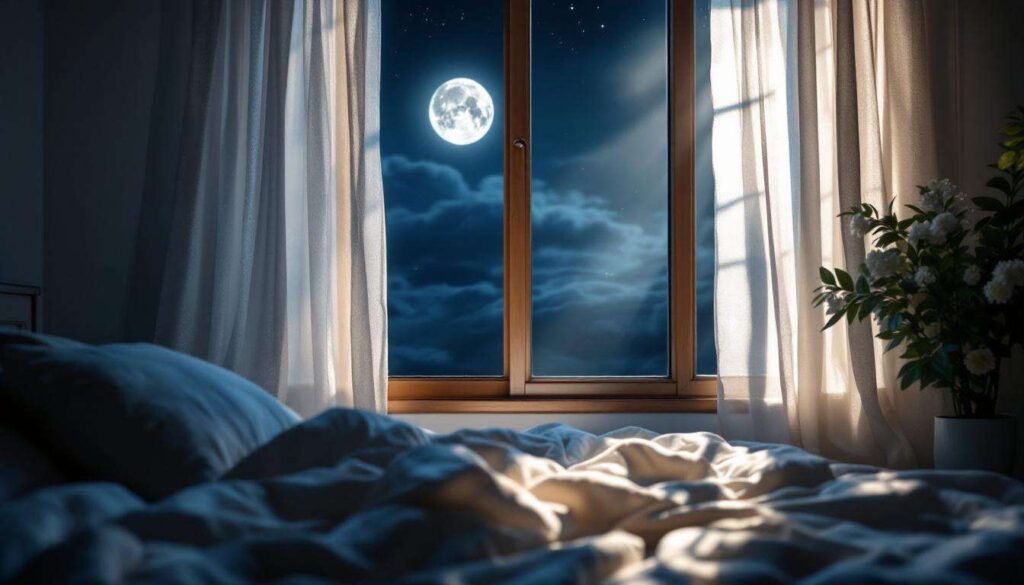
The most obvious mechanism through which the full moon might affect sleep involves increased nighttime illumination. Even modest light exposure can suppress melatonin production, the hormone responsible for promoting sleep. During a full moon, ambient light levels increase substantially, potentially disrupting normal hormonal rhythms even when sleeping indoors with curtains.
Gravitational Effects and Biological Rhythms
Some researchers have proposed that the moon’s gravitational influence, which demonstrably affects ocean tides, might also impact biological fluids and cellular processes. While humans are far smaller than oceans, our bodies are approximately 60% water, leading to speculation about subtle gravitational effects on:
- Cerebrospinal fluid dynamics
- Intracellular water distribution
- Blood flow patterns
- Neurological function
However, this hypothesis remains highly speculative and lacks substantial empirical support, as the gravitational forces involved are extremely weak at the individual organism level.
Evolutionary Perspectives
From an evolutionary standpoint, sensitivity to lunar cycles may have provided adaptive advantages to our ancestors. Increased nighttime visibility during full moons could have affected predator-prey dynamics, social behaviors, and activity patterns. Modern humans may retain vestiges of these ancient adaptations, manifesting as altered sleep patterns during full moon phases.
Beyond sleep physiology, researchers have also investigated whether lunar phases correlate with psychological and emotional states.
Connection Between the Full Moon and Mental Health
The term “lunacy” itself derives from the Latin word for moon, reflecting long-standing beliefs about lunar influences on mental states. Modern research has examined whether these folk beliefs have any scientific basis.
Psychiatric Admissions and Emergency Room Visits
Several studies have analyzed hospital records to determine whether psychiatric emergencies increase during full moons. Results have been inconsistent, with some studies reporting slight increases in certain conditions while others find no correlation. The complexity of mental health conditions and the multitude of contributing factors make it difficult to isolate lunar effects from other variables.
Sleep Deprivation and Emotional Regulation
If the full moon does reduce sleep quality and duration, this could indirectly affect mental health through well-established connections between sleep deprivation and:
- Increased anxiety and irritability
- Impaired emotional processing
- Reduced stress tolerance
- Exacerbation of existing mood disorders
This indirect pathway may explain some reported associations between lunar phases and psychological distress, even if the moon doesn’t directly influence mental health.
Cultural Expectations and Nocebo Effects
Awareness of cultural beliefs about the full moon may create self-fulfilling prophecies. Individuals who expect to sleep poorly during full moons may experience increased anxiety about sleep, which paradoxically worsens sleep quality through a nocebo effect. Distinguishing genuine physiological effects from psychologically mediated ones remains a significant research challenge.
Despite growing interest in lunar effects on sleep and health, significant gaps remain in our understanding.
The Limitations of Current Research on the Moon and Sleep
While existing studies have produced intriguing findings, the research field faces several important limitations that constrain definitive conclusions.
Sample Size and Population Diversity
Many studies examining lunar effects on sleep involve relatively small sample sizes, limiting statistical power and generalizability. Additionally, most research has focused on populations in developed countries with significant artificial light exposure, potentially missing effects that might be more pronounced in populations with greater exposure to natural light cycles.
Confounding Variables
Isolating lunar effects from other variables presents substantial challenges:
- Seasonal variations in daylight and temperature
- Individual differences in light sensitivity
- Variations in sleep environment and habits
- Psychological expectations and cultural beliefs
- Measurement inconsistencies across studies
These confounding factors make it difficult to determine whether observed effects truly result from lunar phases or from correlated environmental or psychological variables.
Mechanistic Understanding
Perhaps the most significant limitation is the lack of clear mechanistic explanations for how lunar phases might influence sleep. Without understanding the biological pathways involved, it remains unclear whether reported correlations represent genuine causal relationships or statistical artifacts. Further research employing molecular and neurological techniques is needed to elucidate potential mechanisms.
While science continues investigating these questions, practical strategies can help mitigate potential lunar effects on sleep.
Tips for Better Sleep During the Full Moon
Whether or not you believe in lunar influences on sleep, implementing evidence-based sleep hygiene practices can improve rest quality regardless of the moon phase.
Optimize Your Sleep Environment
Creating an ideal sleep environment involves controlling factors that commonly disrupt rest:
- Install blackout curtains to eliminate external light, including moonlight
- Maintain a cool room temperature between 60-67 degrees Fahrenheit
- Use white noise machines to mask disruptive sounds
- Remove electronic devices that emit blue light
- Ensure comfortable bedding and mattress support
Establish Consistent Sleep Routines
Maintaining regular sleep-wake schedules helps reinforce natural circadian rhythms. Going to bed and waking at consistent times, even on weekends, strengthens the body’s internal clock and may reduce susceptibility to external disruptions like lunar phases.
Manage Light Exposure
Since increased nighttime illumination represents the most plausible mechanism for lunar sleep effects, strategic light management can help:
- Dim indoor lights in the evening hours
- Avoid screens for at least one hour before bedtime
- Use amber or red-tinted lights in bathrooms for nighttime use
- Consider wearing a sleep mask if room-darkening curtains are insufficient
Practice Relaxation Techniques
If anxiety about sleep during full moons creates a self-fulfilling prophecy, relaxation practices can help break this cycle. Meditation, progressive muscle relaxation, and deep breathing exercises reduce physiological arousal and promote sleep readiness.
The question of whether the full moon affects sleep remains partially answered. While some studies demonstrate measurable changes in sleep architecture during full moon phases, results remain inconsistent and mechanistic understanding is incomplete. The reduction in deep sleep observed in controlled settings raises legitimate concerns about potential health impacts, given the critical role of this sleep stage in physical and cognitive function. However, methodological limitations and confounding variables prevent definitive conclusions. Individual sensitivity likely varies considerably, with some people experiencing noticeable effects while others remain unaffected. Regardless of lunar influences, maintaining good sleep hygiene practices provides benefits that extend beyond any single environmental factor. As research continues, we may gain clearer insights into this ancient question, potentially revealing subtle ways in which our biology remains connected to natural cycles that governed our ancestors’ lives.